Grid5000:Home: Difference between revisions
No edit summary |
mNo edit summary |
||
| (132 intermediate revisions by 13 users not shown) | |||
| Line 1: | Line 1: | ||
__NOTOC__ __NOEDITSECTION__ | __NOTOC__ __NOEDITSECTION__ | ||
{|width="95%" | {|width="95%" | ||
|- | |- valign="top" | ||
| width=" | |bgcolor="#888888" style="border:1px solid #cccccc;padding:2em;padding-top:1em;"| | ||
[[Image: | [[File:Slices-ri-white-color.png|260px|left|link=https://www.slices-ri.eu]] | ||
<b>Grid'5000 is a precursor infrastructure of [https://www.slices-fr.eu SLICES-FR], the French node of [https://www.slices-ri.eu SLICES-RI], Scientific Large Scale Infrastructure for Computing/Communication Experimental Studies.</b> | |||
<br/> | |||
Content on this website is partly outdated. Technical information remains relevant. | |||
|} | |||
{|width="95%" | |||
|- valign="top" | |||
|bgcolor="#f5fff5" style="border:1px solid #cccccc;padding:1em;padding-top:0.5em;width:70%"| | |||
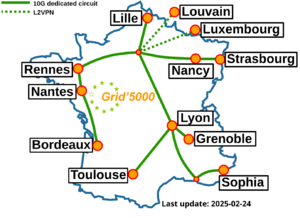
[[Image:g5k-backbone.png|thumbnail|300px|left||link=https://www.grid5000.fr]] | |||
'''Grid'5000 is a large-scale and flexible testbed for experiment-driven research in all areas of computer science, with a focus on parallel and distributed computing, including Cloud, HPC, Big Data and AI.''' | |||
Key features: | |||
* provides '''access to a large amount of resources''': 15000 cores, 800 compute-nodes grouped in homogeneous clusters, and featuring various technologies: PMEM, GPU, SSD, NVMe, 10G and 25G Ethernet, Infiniband, Omni-Path | |||
* '''highly reconfigurable and controllable''': researchers can experiment with a fully customized software stack thanks to bare-metal deployment features, and can isolate their experiment at the networking layer | |||
* '''advanced monitoring and measurement features for traces collection of networking and power consumption''', providing a deep understanding of experiments | |||
* '''designed to support Open Science and reproducible research''', with full traceability of infrastructure and software changes on the testbed | |||
* '''a vibrant community''' of 500+ users supported by a solid technical team | |||
<br> | |||
Read more about our [[Team|teams]], our [[Publications|publications]], and the [[Grid5000:UsagePolicy|usage policy]] of the testbed. Then [[Grid5000:Get_an_account|get an account]], and learn how to use the testbed with our [[Getting_Started|Getting Started tutorial]] and the rest of our [[:Category:Portal:User|Users portal]]. | |||
' | <br> | ||
Published documents and presentations: | |||
* [https://www.inria.fr/fr/grid5000-20-ans-hpc-reseau-informatique 20th anniversary commemoration (2023)] → [https://www.youtube.com/watch?v=UD5-Y0vcmVI presentations video replay] (French only) | |||
* [[Media:Grid5000.pdf|Presentation of Grid'5000]] (April 2019) | |||
* [https://www.grid5000.fr/mediawiki/images/Grid5000_science-advisory-board_report_2018.pdf Report from the Grid'5000 Science Advisory Board (2018)] | |||
Older documents: | |||
* [https://www.grid5000.fr/slides/2014-09-24-Cluster2014-KeynoteFD-v2.pdf Slides from Frederic Desprez's keynote at IEEE CLUSTER 2014] | |||
* [https://www.grid5000.fr/ScientificCommittee/SAB%20report%20final%20short.pdf Report from the Grid'5000 Science Advisory Board (2014)] | |||
<br> | |||
Grid'5000 is supported by a scientific interest group (GIS) hosted by Inria and including CNRS, RENATER and several Universities as well as other organizations. Inria has been supporting Grid'5000 through ADT ALADDIN-G5K (2007-2013), ADT LAPLACE (2014-2016), and IPL [[Hemera|HEMERA]] (2010-2014). | |||
|| | |||
'''Most recent news''' | |||
<rss max=4 item-max-length="150">https://www.grid5000.fr/rss/G5KNews.php</rss> | |||
<center> | |||
[[News|Read more news]] | |||
</center> | |||
|} | |} | ||
---- | ---- | ||
{{#status:0|0|0|http://bugzilla.grid5000.fr/status/upcoming.json}} | |||
== Random pick of publications == | |||
{{#publications:}} | |||
{{# | |||
=== Grid'5000 sites=== | |||
= | {|width="100%" cellspacing="3" | ||
{|width=" | |||
|- valign="top" | |- valign="top" | ||
|width="33%" bgcolor="#f5f5f5" style="border:1px solid #cccccc;padding:1em;padding-top:0.5em;"| | |width="33%" bgcolor="#f5f5f5" style="border:1px solid #cccccc;padding:1em;padding-top:0.5em;"| | ||
* [[Grenoble:Home|Grenoble]] | * [[Grenoble:Home|Grenoble]] | ||
* [[Lille:Home|Lille]] | * [[Lille:Home|Lille]] | ||
* [[Luxembourg:Home|Luxembourg]] | * [[Luxembourg:Home|Luxembourg]] | ||
* [[Louvain:Home|Louvain]] | |||
|width="33%" bgcolor="#f5f5f5" style="border:1px solid #cccccc;padding:1em;padding-top:0.5em;"| | |width="33%" bgcolor="#f5f5f5" style="border:1px solid #cccccc;padding:1em;padding-top:0.5em;"| | ||
* [[Lyon:Home|Lyon]] | * [[Lyon:Home|Lyon]] | ||
* [[Nancy:Home|Nancy]] | * [[Nancy:Home|Nancy]] | ||
* [[ | * [[Nantes:Home|Nantes]] | ||
* [[ | * [[Rennes:Home|Rennes]] | ||
|width="33%" bgcolor="#f5f5f5" style="border:1px solid #cccccc;padding:1em;padding-top:0.5em;"| | |width="33%" bgcolor="#f5f5f5" style="border:1px solid #cccccc;padding:1em;padding-top:0.5em;"| | ||
* [[Sophia:Home|Sophia-Antipolis]] | * [[Sophia:Home|Sophia-Antipolis]] | ||
* [[Strasbourg:Home|Strasbourg]] | |||
* [[Toulouse:Home|Toulouse]] | * [[Toulouse:Home|Toulouse]] | ||
|- | |- | ||
|} | |} | ||
== Current funding == | == Current funding == | ||
{|width="100%" cellspacing="3" | {|width="100%" cellspacing="3" | ||
|- | |- | ||
| width="50%" bgcolor="#f5f5f5" valign="top" align="center" style="border:1px solid #cccccc;padding:1em;padding-top:0.5em;"| | | width="50%" bgcolor="#f5f5f5" valign="top" align="center" style="border:1px solid #cccccc;padding:1em;padding-top:0.5em;"| | ||
===INRIA=== | ===INRIA=== | ||
[[Image: | [[Image:Logo_INRIA.gif|300px|link=https://www.inria.fr]] | ||
| width="50%" bgcolor="#f5f5f5" valign="top" align="center" style="border:1px solid #cccccc;padding:1em;padding-top:0.5em;"| | | width="50%" bgcolor="#f5f5f5" valign="top" align="center" style="border:1px solid #cccccc;padding:1em;padding-top:0.5em;"| | ||
===CNRS=== | ===CNRS=== | ||
[[Image: | [[Image:CNRS-filaire-Quadri.png|125px|link=https://www.cnrs.fr]] | ||
|- | |- | ||
| width="50%" bgcolor="#f5f5f5" valign="top" align="center" style="border:1px solid #cccccc;padding:1em;padding-top:0.5em;"| | | width="50%" bgcolor="#f5f5f5" valign="top" align="center" style="border:1px solid #cccccc;padding:1em;padding-top:0.5em;"| | ||
===Universities=== | ===Universities=== | ||
IMT Atlantique<br/> | |||
Université Grenoble Alpes, Grenoble INP<br/> | |||
Université Rennes 1, Rennes<br/> | |||
Institut National Polytechnique de Toulouse / INSA / FERIA / Université Paul Sabatier, Toulouse<br/> | Institut National Polytechnique de Toulouse / INSA / FERIA / Université Paul Sabatier, Toulouse<br/> | ||
Université Bordeaux 1, Bordeaux<br/> | |||
Université Lille 1, Lille<br/> | |||
École Normale Supérieure, Lyon<br/> | |||
| width="50%" bgcolor="#f5f5f5" valign="top" align="center" style="border:1px solid #cccccc;padding:1em;padding-top:0.5em;"| | | width="50%" bgcolor="#f5f5f5" valign="top" align="center" style="border:1px solid #cccccc;padding:1em;padding-top:0.5em;"| | ||
===Regional councils=== | ===Regional councils=== | ||
Aquitaine<br/> | Aquitaine<br/> | ||
Auvergne-Rhône-Alpes<br/> | |||
Bretagne<br/> | Bretagne<br/> | ||
Champagne-Ardenne<br/> | |||
Provence Alpes Côte d'Azur<br/> | Provence Alpes Côte d'Azur<br/> | ||
Hauts de France<br/> | |||
Lorraine<br/> | Lorraine<br/> | ||
|} | |} | ||
Latest revision as of 12:46, 27 August 2026
 Grid'5000 is a precursor infrastructure of SLICES-FR, the French node of SLICES-RI, Scientific Large Scale Infrastructure for Computing/Communication Experimental Studies.
|
|
Grid'5000 is a large-scale and flexible testbed for experiment-driven research in all areas of computer science, with a focus on parallel and distributed computing, including Cloud, HPC, Big Data and AI. Key features:
Older documents:
|
Most recent news
Dear users, We are pleased to announce that Debian 13 (Trixie) std environment is now the default environment on most nodes. See `kaenv3...
Dear users, The default standard environment has changed to Debian 13 for some selected clusters over the past few weeks. Here the... Hello everyone, Let's start with a quick TLDR, details on the rationale and implementation are available below: new modules will be avail...
Recently, we have observed a critical increase in resource consumption (CPU and memory) on these nodes. This is primarily caused by VS Code Serv... |

Random pick of publications
Five random publications that benefited from Grid'5000 (at least 3009 overall):
- Théophile Bastian. Towards automatic characterization of microarchitectural behaviour form performance modeling of computing kernels : an analysis of the Cortex A72 and Intel microarchitectures. Hardware Architecture cs.AR. Université Grenoble Alpes 2020-.., 2024. English. NNT : 2024GRALM072. tel-05116111 view on HAL pdf
- Govind KP, Guillaume Pierre, Romain Rouvoy. Energy-Efficient Right-Sizing of Kafka-like Message Brokers for IoT Workloads. ICPE 2026 - 17th ACM/SPEC International Conference on Performance Engineering, ACM; SPEC, May 2026, Florence, Italy. 10.1145/3777884.3797015. hal-05512966 view on HAL pdf
- Jérémie Rodez, Patricia Stolf, Thierry Monteil. Online Placement of Distributed Machine Learning Services over Heterogeneous IoT Platforms. 2026. hal-05726991 view on HAL pdf
- Daniel Richards Arputharaj, Charlotte Rodriguez, Angelo Rodio, Giovanni Neglia. Green Federated Learning via Carbon-Aware Client and Time Slot Scheduling. MASCOTS 2025 - 33rd International Symposium on the Modeling, Analysis, and Simulation of Computer and Telecommunication System, Oct 2025, Paris, France. 10.1109/MASCOTS67699.2025.11283314. hal-05423023 view on HAL pdf
- Ndeye-Emilie Mbengue. In Data or Invisible: Toward a Better Digital Representation of Low-Resource Languages with Knowledge Graphs. ESWC 2026 - 23rd European Semantic Web Conference, May 2026, Dubrovnik, Croatia. hal-05608081 view on HAL pdf
Grid'5000 sites
Current funding
INRIA
|
CNRS
|
UniversitiesIMT Atlantique |
Regional councilsAquitaine |